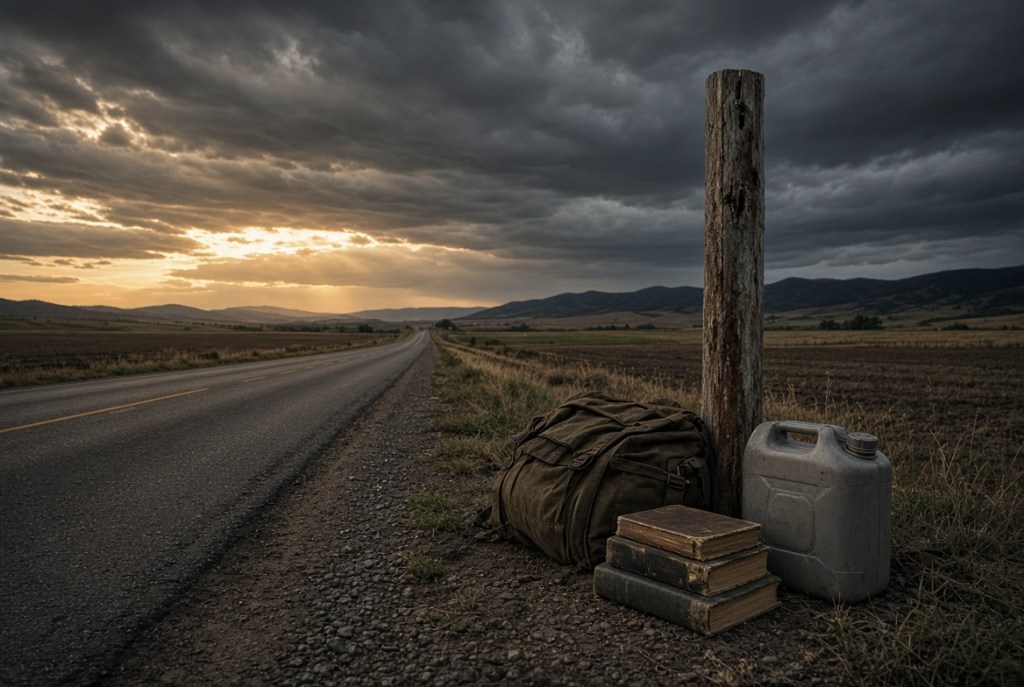
A couple of years ago, while logging long miles for my drone work, I listened to the audiobooks of The Fourth Turning and The Fourth Turning Is Here. The idea stuck with me: roughly every eighty years, societies cycle through a Crisis era that reshapes institutions, often messily. Strauss and Howe dated the current Crisis from the 2008 financial meltdown and expected its more intense phase through the 2020s into the early 2030s. I don’t treat the theory as gospel. History doesn’t run on a fixed schedule. But the patterns have been hard to ignore.

Neil Howe has described us as being in the latter half of this Fourth Turning, with the climax still ahead and a resolution possible by the early 2030s. That tracks with what my prepper tracking has been flagging: not constant catastrophe, but rising structural stress in geopolitics, finance, supply chains, and social cohesion. Recent signals include the U.S. national debt topping $40 trillion amid conflict costs, oil and diesel volatility tied to tensions around the Strait of Hormuz, institutional friction after the midterms, and persistently elevated debt-to-GDP levels that leave less room to absorb shocks. Polarization remains high, trust in major institutions is low, and preparedness interest (homesteading, fuel reserves, precious metals) has stayed elevated even as day-to-day life continues.
These map onto classic Crisis-era markers: great-power or regional friction that can spill into energy and shipping chokepoints, fiscal pressure that forces hard choices, and a social mood that favors stronger (or at least more decisive) responses over consensus. Counter-signals exist too. Markets haven’t collapsed, daily infrastructure mostly holds, and diplomacy still surfaces. I’m not claiming any single outcome is locked in. I’m just noting the alignment and paying attention.
Probable scenarios that fit the pattern
Given current geo-political and economic trends, a few pathways look more plausible than others in the next few years:
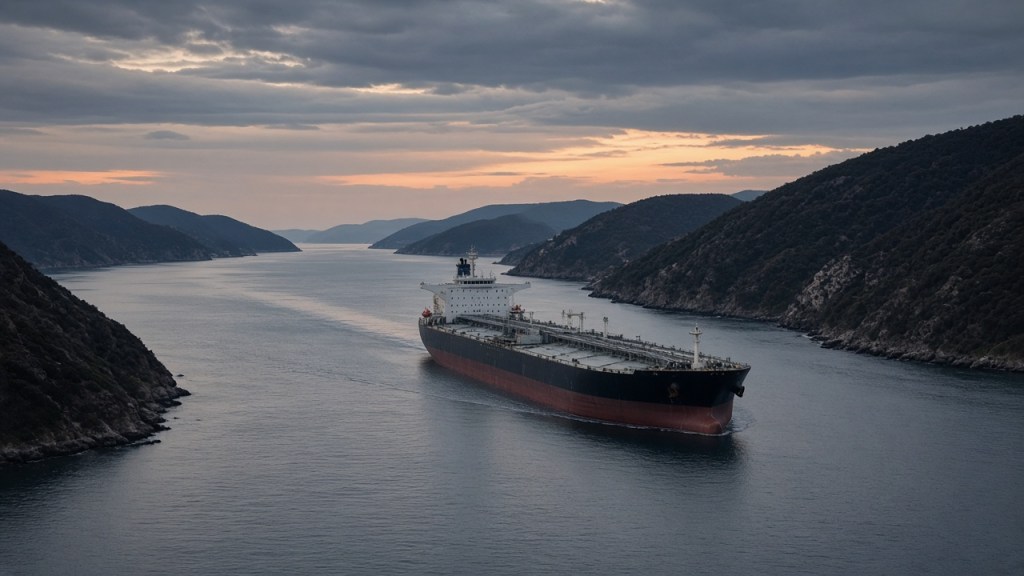
- Energy and supply disruptions that persist or re-escalate. Hormuz-related tensions have already shown how quickly oil and freight costs can spike. A further round of strikes, mining, or shipping interference could push diesel and grocery prices higher for an extended period, even without full-scale war.
- Fiscal stress that forces trade-offs. With debt above $40 trillion and interest costs competing with other spending, a debt-ceiling or budget fight could coincide with higher yields. That raises the odds of tighter credit, slower growth, or inflation that sticks around longer than expected.
- Domestic political gridlock after midterms complicates crisis response. Divided government can slow spending deals or foreign-policy support at the same moment external shocks arrive. Historical Crisis periods often feature temporary concentration of authority or sharp partisan clashes before a new order settles.
- A broader great-power or multi-theater friction that compounds the above. Regional conflicts have a way of testing alliances, supply lines, and domestic budgets simultaneously. The most likely version is not sudden total war but prolonged pressure that erodes margins for households and institutions.
None of these are guaranteed. They are the sorts of pressures that have appeared in prior Crisis eras and that current indicators make more plausible.

Generational archetypes and the roles of Millennials and Gen Z
Strauss and Howe’s framework assigns recurring archetypes. Prophets (Boomers) are the values-driven elders whose earlier Awakening shaped the culture. Nomads (Gen X) are the pragmatic, often skeptical mid-life generation that tends to fill practical leadership gaps. Heroes (Millennials, roughly 1982–early 2000s births) come of age or enter power during the Crisis; they are cast as the civic, team-oriented cohort expected to carry the heavy institutional rebuilding, much as the GI generation did after World War II. Artists (Gen Z / Homelanders) grow up during the Crisis and tend to be more adaptive and cautious; they will help staff and stabilize whatever new order emerges rather than lead the decisive fights.
In practice that suggests Millennials will increasingly set the tone for institutions, military service, and policy responses as the Crisis intensifies, while Gen Z adapts to the constraints and opportunities of the post-climax period. Gen Xers often end up as the operational bridges. Again, this is a pattern, not a script.

What you can do to prepare (practical and incremental)
Focus on resilience that helps whether the theory is exactly right or merely directionally useful:
- Keep a rotating pantry of shelf-stable food and water for at least two to four weeks. Replenish as you use it.
- Maintain vehicle fuel at half a tank or better and hold a modest reserve of fuel and common spare parts if you can store them safely.
- Build basic skills: first aid, simple repairs, gardening or food preservation, and navigation without constant phone reliance.
- Strengthen local ties. Neighbors, family, church or community groups matter because institutional response can lag.
- Review finances for high-interest debt, emergency cash, and some hard assets (precious metals have historically held purchasing power in inflationary or crisis periods).
- Stay physically ready. Fitness and health reduce dependence on strained systems.
- Stay informed without doom-scrolling. Track a few reliable indicators (energy prices, debt headlines, supply reports) rather than every rumor.
I’m not rearranging my entire life around a prediction. I am treating the alignment as a reason to keep ordinary preparedness higher than it was a decade ago. The Fourth Turning framework has been useful for spotting the season we’re in. It is not a precise calendar. Watch the trends, handle what is in front of you, and keep the margin of safety that lets a family ride out the bumps that history suggests are more likely than not in a Crisis era.
Keep reading: Practical Prepping · Slow Descent · Contact





Leave a Reply