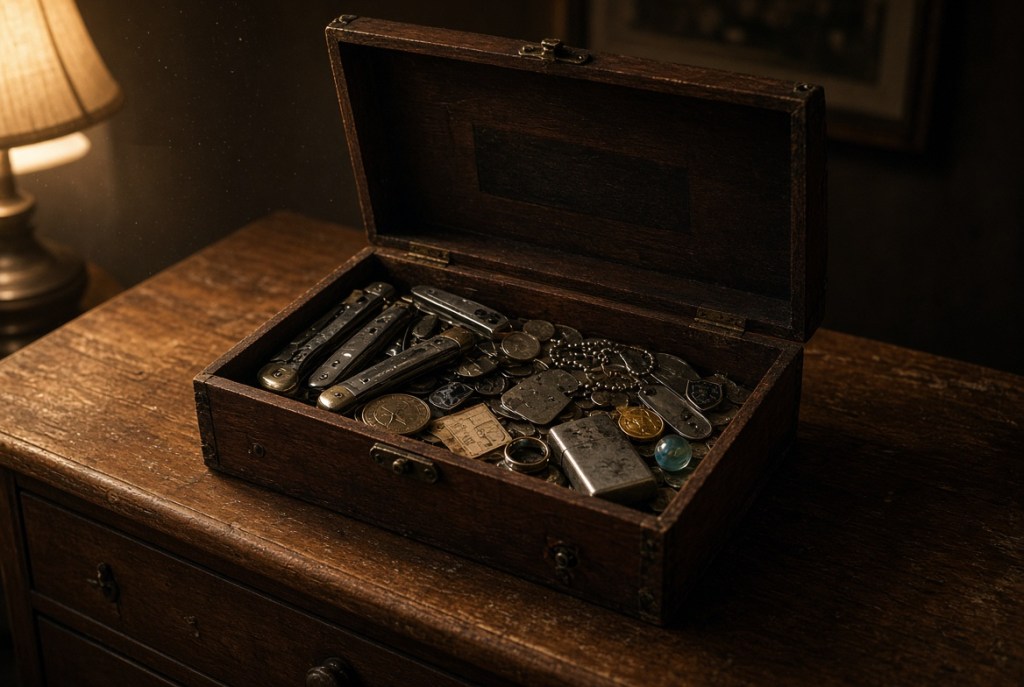
My best friend Kyle and I named it before we had words for what we were doing.
Grade school. We traded the way boys do when a whole life still fits in a pocket. A small knife that you found. A coin that looked older than it was. A lighter we were not supposed to have. A pin off somebody’s jacket. A cool rock that had survived one specific adventure. The deal was never just the object. It was the story stuck to it, and the fact that the other kid had to want it enough to give something up. After a while we needed a place for the stuff that made the cut. We called it the cool box.
The name stuck. Decades later I still use it. Kyle knows what I mean. So do a lot of other men who never heard the phrase. They just have “The Box.”
Not a toolbox. Not the junk drawer. A box. A footlocker. An old ammo can. A wooden chest that still smells like oil and cedar. A cigar box on a closet shelf nobody is allowed to organize. Inside it is a private museum and reminders of a life that actually happened.
I have one. So do many guys I grew up with, as well as the guys I served with in the Army. Coins. Knives. Lighters. Pins. Challenge coins. A worn dog tag. A ticket stub that should have been thrown away in 2004 from that date with the girl who got away. A pocket knife that belonged to somebody who is not here anymore. A few men I talked to do not even have objects left (sometimes it was a divorce, a house fire or something else). However, even they have something like a notebook. Dates. Names. One sentence about a night they still cannot quite explain. That is their oldest piece. The box got thinner. The need did not.
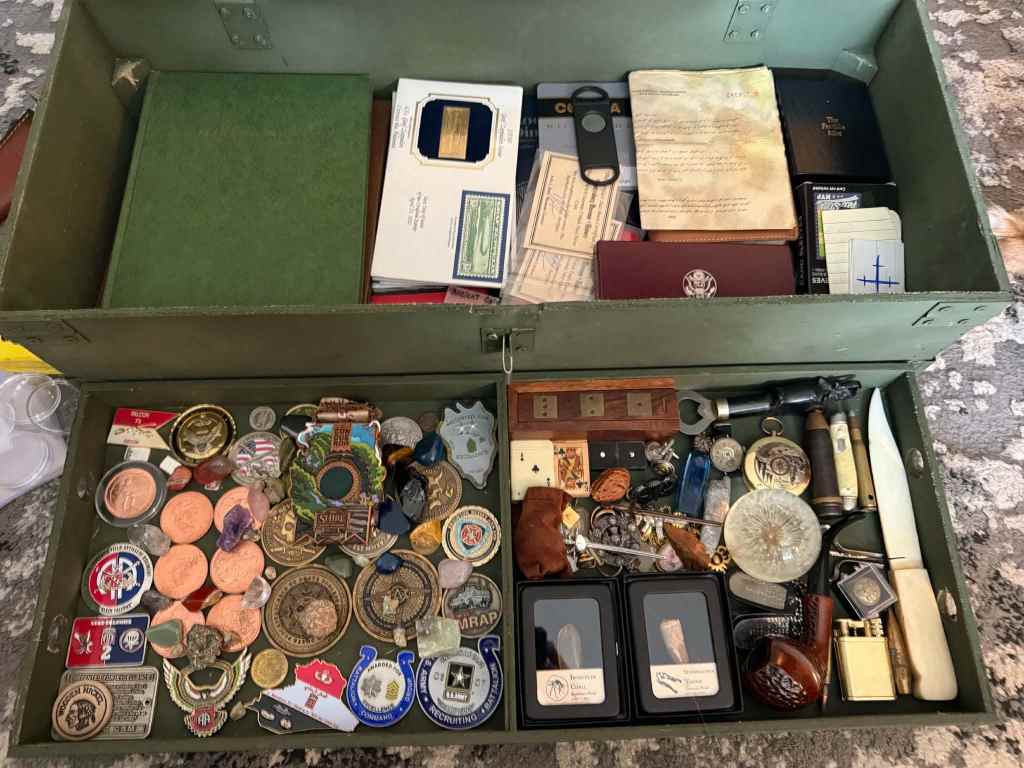
What changes is the contents.
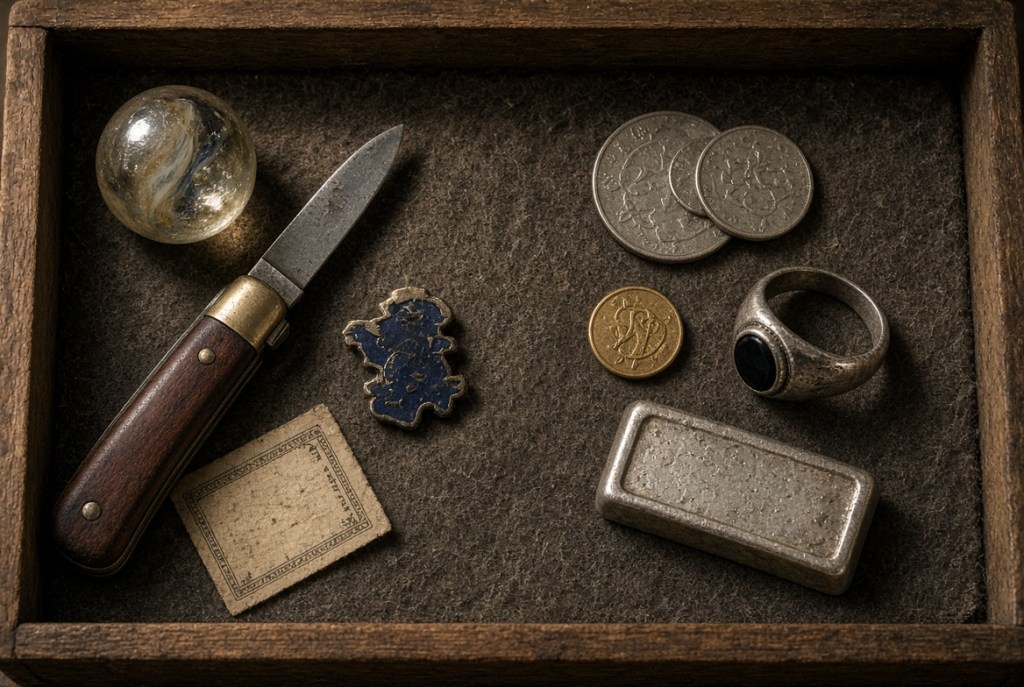
A guy’s “cool box” is almost all story and almost no market. A marble. A broken watch that felt like treasure because you won the trade. A patch. A cheap knife. Those things were valuable because two boys decided they were. Then the boy gets older and the box does too. Most of the childhood pieces stay. They have to, or it stops being the same box. Other things start landing in there that would make an appraiser sit up. Gold. Silver. A grandfather’s ring. A coin that is not just old looking. It is actually old now. A watch that keeps time and also keeps a person remembered. Jewelry you did not buy to wear so much as to hold. Historical artifacts you picked up because they already knew how to last and gives your collection even more depth and mystery.
That is the quiet evolution nobody names. The cool box starts as a kid’s vault of meaning. Over years it becomes both. Sentiment and weight under the same hinged lid. The rock from that fourth grade camping trip sits next to a silver coin your dad gave you before he passed away. The lighter from a buddy you used to party with sits next to something that would survive a fire and still be worth money. You did not outgrow the junk. Your definition of worth keeping got wider. Some of it is only worth something to you. Some of it would be worth something to a stranger. You keep both. The point was never purity. The point was the pile that survived and made “the cut” that you unconsciously decided on.
Women had a name for the future facing version of this. The “Hope Chest“. Linens. Quilts. Silver. The household you were building toward. A Cool Box is not that. Ours faces the other direction. It is not hope. It is proof. For Kyle and I it started as commerce between two kids who already understood that some things were too good to spend. And growing up not rich, it was nice to create our own treasure.
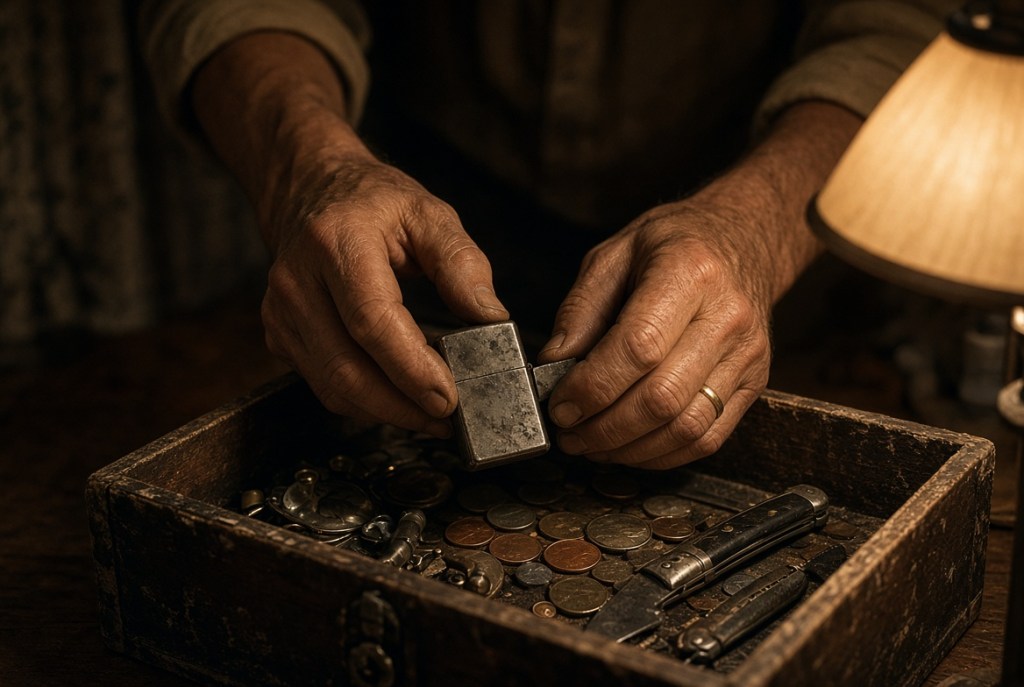
The ritual is the part people do not talk about. You do not dump it on the bed every weekend. You open it when the house is quiet on a Sunday evening. You take things out one at a time carefully. You remember who handed you that lighter. You remember the weight of that knife the first time it was yours. You remember the trade, the conversations behind it. You weigh a piece of silver and feel the difference between the object that was magic because you were twelve and the object that is heavy because the world agrees it is. You carefully put them back with reverence, in an order that only makes sense to you. Then you close the lid with a tinge of sadness and appreciation. Something in you settles. That is the point. Life keeps asking you to be useful, current, optimized, and fine. The box is the one place you are allowed to be the person who already lived.
Sailors used to call the small version a ditty box. Letters. A photograph. A pipe. A charm from home. The few things that still belonged to you when the ship belonged to the Navy. Theodore Roosevelt wrote about the little box of trinkets on his father’s dressing table, then about the ditty box on his own, and the way children treated those objects like treasure. Fathers have been doing this on dressers for a long time. We thought we invented it because two boys needed a name for the pile that survived the barter.
Harry Potter called the dark version a Horcrux. A piece of a soul hidden in an object so it could not fully die. That is too gothic for what this is. The instinct is close though. You put a fragment of a former self in a thing that will outlast a mood, a job, a marriage, a phone. The object does not have magic. The memory does. The object is just the only container that does not get a software update and forget you. Gold and silver happen to be the fragments that can also pay a bill if the worst day comes. That does not make them less sacred. It makes the box honest about adulthood.
Why do we do it?
Continuity. The fear is not that you might need a spare bolt someday. The fear is that the years happened on autopilot and left no witness. A concert ticket. A unit coin. A childhood marble. A notebook line from nineteen years ago. Receipts. They say you were there. You were that kid. You were that soldier. You were that friend. You are still in the chain.
Feeling. A lot of men were not trained to narrate it out loud. So it goes into metal and wood and paper. A buddy of mine keeps his father’s Zippo and will not talk about his father for more than forty seconds. He will turn that lighter over in his hand for a long time. That is the conversation.
The analog hole millennials fell into. We grew up with objects first and screens second. Ticket stubs were real. Photos came back from a store. A mix CD was a document. Then everything migrated into a device that sells you things and argues with you. The box became the last place a memory could sit still. We shoved the evidence in a chest and called it junk so nobody would make us explain it.
And the old habit of keeping a reserve you can hold. Not a portfolio. A physical one. Boys start with trades. Men add weight. A cool box that only has childhood relics is a time capsule. A cool box that also holds gold, silver, jewelry, and artifacts is a time capsule that learned how the world works. You can open it for the feeling. You can also open it and know that some of what you loved turned out to be real in more than one way.
Military guys know this in their bones. Service produces relics whether you want them or not. A patch is not décor. A coin is not a collectible. They are compressed time earned by blood, sweat and tears. When the uniform comes off, the box is often the only remaining formation. You inventory it the way you used to inventory gear. Not because you are sentimental, but because you refuse to let the record of existence disappear.
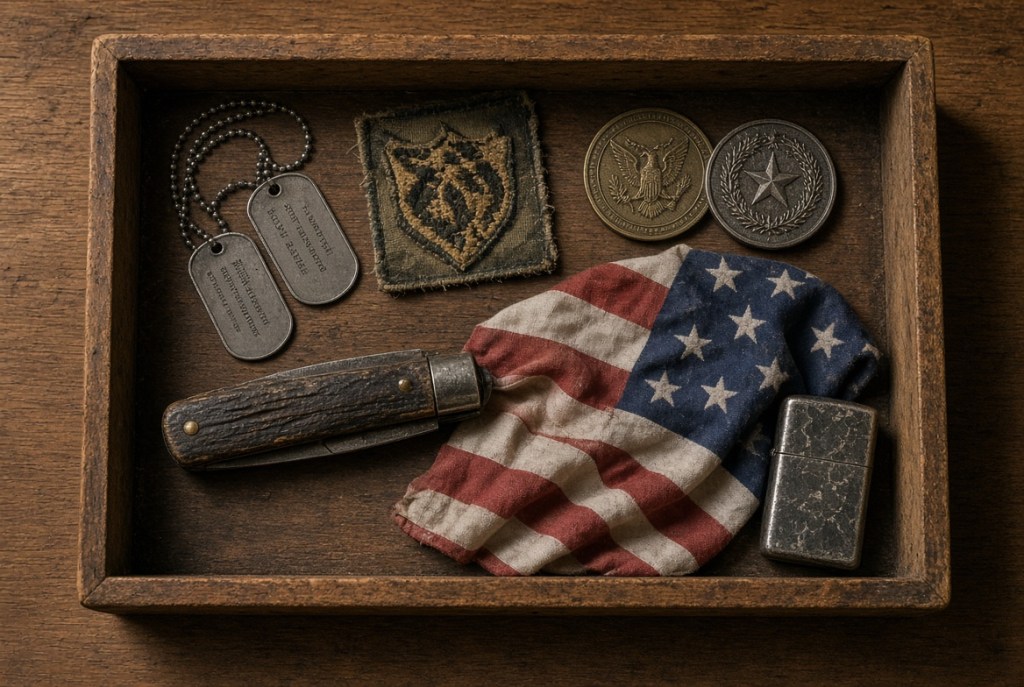
Some men keep almost nothing and still have the practice. The notebook is enough. Some of us have a whole chest of doo-dads and would look insane trying to justify each one to a stranger. Same habit. A private archive so the present tense does not get to pretend it is the only tense that counts.
This is not pathology. Hoarding is when the stuff owns the room. This is smaller and more deliberate. The sacred part most “Cool Box” keepers don’t realize, is the lid. You decide when it opens. You decide what stays. You decide what the story is. Every memory now wants to be public, searchable, and forgettable. A locked box of mostly unremarkable objects, and a few remarkable ones, is almost a moral position.
Kyle and I did not know any of that when we named it. We just knew some trades were permanent. You did not flip those items again. They went in the cool box and they stayed, because they had already become part of who you were that year. The box kept accepting new kinds of permanence. First the things that mattered because we said so. Later the things that matter even if nobody says so.
Open yours when nobody is watching. Do not curate it. Do not apologize for the knife that does not match the rest of your life now, or for the silver that does. Pick up the oldest thing in there. Then pick up the heaviest.
One will tell you who you were.
The other will tell you that you learned how to keep it.
Keep reading: The Midnight Glow: 80s and 90s Kids Waking Up on That Couch · The Three Types of Friends · Contact




Leave a Reply