

Let’s be honest: you’ve thought about it. You’re idling at a red light on your morning commute, an armored truck rumbles past with that satisfying clank of cash heavy tires, and for three glorious seconds your brain turns into a full blown Hollywood screenwriter. What if I just… You picture the ski masks, the squealing getaway van, the life changing duffel bags stuffed with unmarked bills. Then the light turns green, you blink, and you’re back to wondering if you remembered to pack lunch or whether the boss will notice you’re five minutes late again. Welcome to the human mind, naturally devious, endlessly inventive, and (thank goodness) mostly harmless.
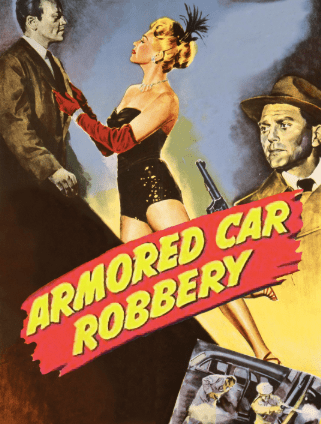
This is not some rare sociopathic glitch. It is universal. We all harbor these little criminal daydreams because our brains are wired for “what if” scenarios. They are the mental equivalent of testing the emergency brake on life: fun to imagine, terrifying in practice, and completely normal. Hollywood knows this and has been cashing in for decades. Classic noirs like Armored Car Robbery (1950) and The Brink’s Job (1978) turned real life heists into edge of your seat capers. More recently, Zach Galifianakis stumbled through the bumbling 1997 Loomis Fargo robbery in the comedy Masterminds, while films like Armored (2009), Den of Thieves, and Wrath of Man keep the fantasy alive with high stakes action and clever twists. These movies do not just entertain. They validate the daydream. See? Even the professionals botch it spectacularly, which somehow makes our own mental versions feel a little less ridiculous.
But the armored car fantasy is not the only one lurking in our skulls. We have all indulged in similar rogue thoughts that reveal just how creative our inner mischief maker can be. Common examples include:
- Mentally robbing a bank while standing in the teller line, calculating exactly how you would time the perfect distraction.
- Rehearsing a flawless takedown of that nightmare boss, complete with dramatic monologue and a mic drop exit.
- Or, yes, even in the darkest corners of the mind, playing out some murder plot scenario against the coworker who chews too loudly or the driver who cut you off in traffic.
These thoughts bubble up uninvited, vivid and ridiculous, then vanish like a bad TikTok. Psychologists note that intrusive violent or criminal thoughts are shockingly common among perfectly normal people. They are not a sign you are broken. They are simply proof that your imagination has an overactive “crime channel” that needs an occasional outlet.

The armored car companies, of course, take these fantasies very seriously. They have turned deterrence into an art form, layering security measures so thick that any would be robber would need an engineering degree just to get started. Here is how they stay one step ahead:
- Bullet resistant glass and heavy armor plating that can shrug off small arms fire.
- Run flat tires and reinforced chassis designed to keep rolling even after a deliberate sabotage attempt.
- GPS tracking and real time monitoring so dispatch knows exactly where every truck is at all times.
- Dual control protocols requiring two employees to verify every count and movement.
- Sealed cash containers rigged with ink or dye packs that explode and ruin the money if tampered with.
- Strict, varying routes and schedules that prevent predictable patterns, plus “all clear” procedures before any door opens.
- Extra deterrents like pepper spray dispensers or high decibel sirens that can turn a quiet street into a scene from a disaster movie.

It is less Ocean’s Eleven glamour and more Fort Knox on Wheels. The message is clear: we have seen your daydream, and we planned for it decades ago.
Real life has a way of puncturing the fantasy faster than a dye pack ruins a getaway. Take the 1950 Brink’s robbery in Boston, the so called “crime of the century.” Masked men made off with over 2 million dollars (a fortune then) after months of meticulous planning, but the gang was caught years later after one member cracked under pressure and turned informant. Or the 1997 Dunbar Armored heist in Los Angeles: insider Allen Pace and his crew stole 18.9 million dollars in a slick inside job, hiding in the cafeteria overnight and disabling cameras with surgical precision. Most of the money was never recovered, but the robbers were rounded up after one guy could not resist flashing still banded bills during a real estate deal. Then there is the 1997 Loomis Fargo case, where vault supervisor David Ghantt grabbed 17.3 million dollars with help from friends and fled to Mexico. He was caught after the crew’s flashy spending, loose lips, and amateur mistakes turned the whole operation into a comedy of errors. (Hollywood turned that one into Masterminds because the epilogue was pure slapstick.)

Even more recently, in February 2026 on a highway in Puglia, southern Italy, between Lecce and Brindisi, a masked gang armed with Kalashnikovs blocked the road with burning vehicles, detonated explosives to blow off the back doors and roof of a Battistolli armored truck in a dramatic blast, then engaged in a firefight with police during their getaway attempt. The scene looked straight out of a movie, yet two suspects were quickly arrested and the rest remain hunted, with the security measures once again limiting any real success. In almost every case, the “perfect” score ends with prison time, ruined lives, or worse.
That is the punchline we all need to remember. The difference between a sane person and a psychopath is not the daydream itself. It is the decision to keep it a daydream. Thoughts are cheap. They cost nothing and teach us nothing about our character until we choose to act on them. The rest of us, flawed, curious, occasionally dark humored humans, let the fantasy fade at the next green light and go on with our perfectly legal, occasionally boring lives. And honestly? That might be the most civilized victory of all.
So next time you see that armored truck, go ahead and write the screenplay in your head. Just do not forget to signal before you turn. The real world has enough plot twists already.



 Gary W. Phipps II
Leave a comment