
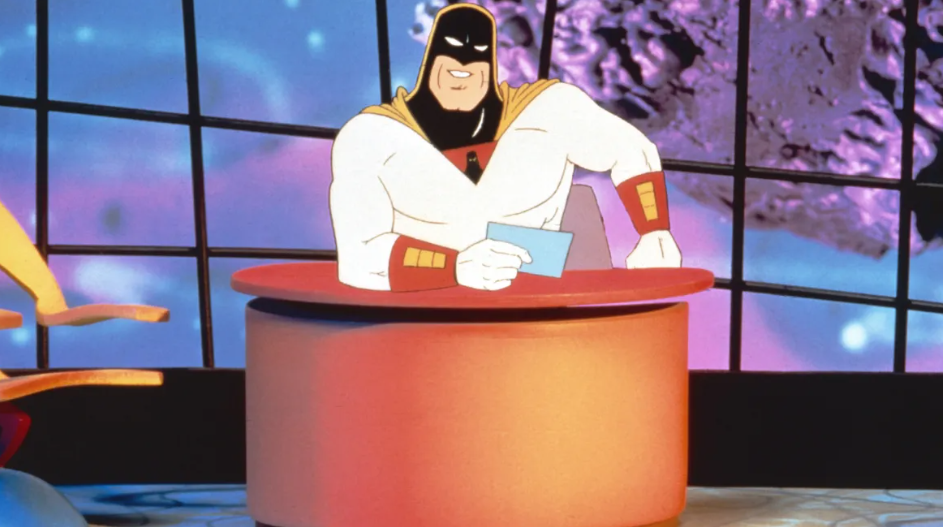
If you were a kid staying up late in the ’90s, there was something undeniably magical about “Space Ghost: Coast to Coast.” When that bizarre, spacey jazz theme started playing and the screen lit up with Space Ghost’s masked mug, you knew you were in for something unlike anything else on TV. It felt like an inside joke you weren’t sure you were supposed to understand but desperately wanted to. This wasn’t just a cartoon, it was something subversive, something for the cool older kids, a secret handshake from late-night cable.

“Space Ghost: Coast to Coast” took a forgotten superhero from the ’60s—Space Ghost, a stoic cosmic crime-fighter originally designed by the great Alex Toth, and threw him into a role no one could have seen coming: a deadpan, clueless talk show host. The show played like a brilliant parody of the late-night interview format, but in a way that only Adult Swim (before Adult Swim even existed) could pull off. They kept the cheesy superhero aesthetic intact but repurposed it to a surrealist’s delight, turning Space Ghost into a sort of bumbling megalomaniac who, along with his ex-villain sidekicks Zorak and Moltar, conducted some of the weirdest interviews ever broadcast.
The guests were real, people like Björk, Beck, and even Thom Yorke, but the interactions were anything but typical. Space Ghost often ignored their answers, asking bizarre follow-up questions that made it feel like the entire thing was one big fever dream. The celebrity guests themselves seemed to be in on the joke, or were just as confused as we were, which made it all the more fun. There was no studio audience, no laugh track, just awkward silences, abrupt cuts, and a relentless feeling that you were watching something very ahead of its time.

In the mid-’90s, before Adult Swim officially carved out its late-night niche on Cartoon Network, “Space Ghost: Coast to Coast” was laying the groundwork for the absurd, irreverent style of comedy that would eventually become synonymous with adult animation. Shows like “Aqua Teen Hunger Force,” “The Eric Andre Show,” and “Rick and Morty” all owe a debt to “Space Ghost.” It was one of the first times a cartoon made it clear that animation could be for adults, not by being explicit or shocking, but by being so dry, so deadpan, and so willing to embrace the weird. It wasn’t loud or in-your-face like a lot of today’s adult content; it thrived on awkward pauses, surreal gags, and the perfect balance between sincerity and mockery.
As a kid, staying up to catch “Space Ghost” felt like an initiation into a secret society of late-night weirdos. The show felt rare and fleeting, something that you almost stumbled upon by accident. It was cool precisely because it was confusing. You didn’t necessarily laugh out loud every time, but you smiled, you furrowed your brow, and you wondered just how on Earth this show got made. And when you’d talk about it the next day, if you could even find anyone else who’d seen it, there was a kind of pride in knowing you were part of the small, strange club who “got” it.
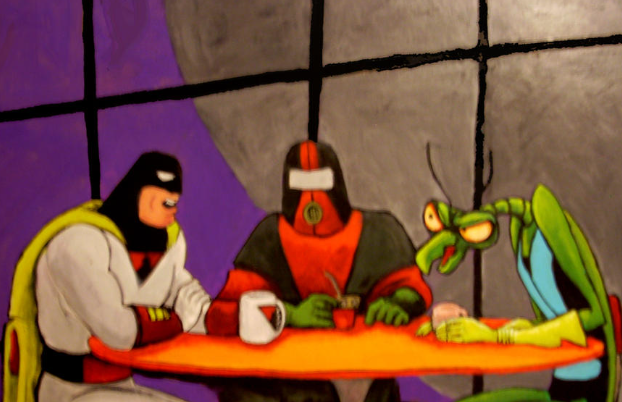
Today’s content landscape is full of shocking humor and instant gratification. The slow-burn awkwardness of Space Ghost might not have the same effect on a generation used to TikTok’s rapid-fire bursts of dopamine. But for those of us who were there, watching Space Ghost bumble his way through interviews with Zorak’s constant insults in the background, it was something special, a piece of television that embraced the odd and made it feel like the coolest thing in the world. It paved the way for so much of what we see in adult animation today, and it will always be that peculiar, late-night gem that made us feel like we were in on something extraordinary.

 Gary W. Phipps II
Leave a comment